

Best Nephrologist in Lucknow is a phrase patients may search when kidney function has significantly reduced and they need specialist guidance about dialysis or kidney transplantation. Kidney failure can affect the body’s ability to remove waste, maintain fluid balance and regulate electrolytes. When kidney function reaches an advanced stage, treatment may include dialysis or a kidney transplant.
For selected patients with advanced kidney failure, transplantation can be an important treatment option. A successful transplant provides a functioning donor kidney that can perform many of the functions of healthy kidneys. However, kidney transplantation is a major medical procedure and is not suitable for every patient.
The decision requires a detailed evaluation of the recipient’s overall health, heart and blood vessel health, infection status, other medical conditions and ability to undergo surgery. A potential living donor also needs a separate medical assessment to determine whether donation is appropriate and whether the donor and recipient are compatible.
Patients looking for a Kidney Transplant Specialist in Lucknow should understand that transplant care involves much more than the operation itself. It starts with recipient and donor evaluation, compatibility testing and preparation before surgery and continues with immunosuppressive medicines, regular blood tests and long-term follow-up.
Dr Santosh Kumar has more than 13 years of clinical experience and is trained in nephrology, with listed special interests including kidney transplantation, including ABO-compatible and ABO-incompatible transplantation. He is associated with Apollomedics Superspeciality Hospitals, Lucknow.
This guide explains when kidney transplantation may be considered, how donor evaluation works, what compatibility means, how dialysis compares with transplantation and what patients should expect after a transplant.
Understanding Kidney Failure and Kidney Treatment in Lucknow
Kidney Treatment in Lucknow may involve different approaches depending on the cause and severity of kidney disease. Kidney failure occurs when the kidneys lose most of their ability to remove waste and excess fluid from the blood.
>
Kidney failure can develop gradually because of chronic conditions such as diabetes and hypertension, or it may follow certain severe illnesses or kidney injuries.
Not every patient with reduced kidney function needs a transplant. Some people can be managed with medicines and lifestyle changes, while others may need haemodialysis or peritoneal dialysis.
For patients with advanced and irreversible kidney failure, transplantation may be considered as another form of renal replacement therapy.
Patients may develop complications involving:
- Fluid retention
- High blood pressure
- Electrolyte imbalance
- Anaemia
- Bone and mineral problems
- Changes in urine output
- Fatigue and weakness
- Nausea or poor appetite
Is Kidney Transplant Right for You? Best Nephrologist in Lucknow Guidance
A Best Nephrologist in Lucknow can help patients understand whether kidney transplantation may be appropriate based on their medical condition. The decision is never based only on the creatinine level or whether a patient is receiving dialysis.
Age alone does not necessarily determine transplant eligibility. A patient with diabetes or another chronic condition may also be considered if the condition is adequately assessed and managed.
The goal of evaluation is to determine whether the expected benefits of transplantation outweigh the risks for that individual patient.
Doctors may evaluate:
- Severity and cause of kidney failure
- Heart and blood vessel health
- Lung and liver function
- Presence of active infections
- Previous or current cancer
- Diabetes and blood-pressure control
- Nutritional status
- Previous surgeries
- Ability to follow long-term treatment
- Availability of a suitable donor
- Blood-group compatibility
- Tissue compatibility

Kidney Transplant Evaluation with a Kidney Transplant Specialist in Lucknow
A Kidney Transplant Specialist in Lucknow may begin the transplant process with a detailed evaluation of both the recipient and potential donor.
The purpose is to determine whether the patient can safely undergo transplantation and whether any health problem needs treatment before surgery.
Recipient Evaluation
The recipient may require:
- Blood tests
- Kidney function testing
- Urine examination
- Blood-group testing
- HLA typing
- Crossmatch testing
- Infection screening
- Heart evaluation
- Imaging studies
- Cancer screening where appropriate
- Assessment of existing medical conditions
Living Donor Evaluation
A potential living donor must be medically fit to donate a kidney. Donor assessment may include kidney-function testing, blood tests, imaging, blood-group testing and other investigations.
The donor’s decision must be voluntary and made after understanding the potential risks and implications of kidney donation.
Compatibility Testing
Blood-group compatibility, HLA characteristics and crossmatching help the transplant team evaluate the relationship between donor and recipient.
These tests are important because the immune system can recognize a transplanted kidney as foreign. The transplant team uses compatibility information to assess the risk of rejection and plan appropriate treatment.
Living Donor Kidney Transplant and Kidney Treatment in Lucknow
For suitable patients, Kidney Treatment in Lucknow may include evaluation for a living donor kidney transplant.
A living donor may be an eligible family member or another person permitted under applicable transplant regulations.
Potential benefits of a living donor transplant may include the ability to plan surgery when the donor and recipient are medically ready. In selected patients, transplantation may also be possible before long-term dialysis becomes necessary.
However, living donation requires careful medical assessment. The donor’s safety remains an important part of the transplant process.
The transplant team evaluates both people independently before deciding whether donation and transplantation are appropriate.
Deceased Donor Transplant with a Kidney Transplant Specialist in Lucknow
A Kidney Transplant Specialist in Lucknow may also guide patients who require evaluation for a deceased donor kidney.
A deceased donor kidney comes from a person who has become an organ donor under an approved donation system. Patients may need to be registered with an appropriate transplant program and wait for a compatible organ.
The availability of a deceased donor kidney cannot be guaranteed. Allocation depends on applicable medical, legal and administrative criteria.
While waiting, patients may continue dialysis or other kidney-supportive treatment as advised by their nephrology team.
ABO-Incompatible Kidney Transplant: What Does It Mean?
Patients searching for the Best Nephrologist in Lucknow for transplant care may come across the term ABO-incompatible kidney transplant.
Blood groups can affect donor-recipient compatibility. In an ABO-incompatible transplant, the donor and recipient have different blood groups that would normally create a higher immunological barrier to transplantation.
In selected cases, specialized transplant protocols may be used to reduce antibody levels and manage the recipient’s immune response.
Dr Santosh Kumar’s professional profile lists interest in both ABO-compatible and ABO-incompatible kidney transplantation.
ABO-incompatible transplantation is not appropriate for every patient. The transplant team must assess antibody levels, overall health, donor suitability and other factors before recommending this approach.
Kidney Transplant Surgery: What Happens During the Procedure?
For patients considering Kidney Treatment in Lucknow, understanding the transplant operation can make the process less confusing.
During kidney transplantation, a functioning donor kidney is placed inside the recipient’s body. In most cases, the patient’s original kidneys are not removed unless there is a specific medical reason.
The transplanted kidney is connected to blood vessels so that it receives blood supply. Its ureter is connected to the bladder to allow urine to pass normally.
The procedure is performed under general anaesthesia.
After surgery, the patient is monitored for:
- Urine production
- Kidney function
- Blood pressure
- Fluid balance
- Infection
- Bleeding
- Signs of rejection
- Other surgical complications
The length of hospital stay and recovery period varies depending on the patient’s health and whether complications occur.
Kidney Transplant Risks and the Role of a Best Nephrologist in Lucknow
A Best Nephrologist in Lucknow can help patients understand that kidney transplantation, despite its potential benefits, is still a major medical procedure.
Possible complications can include:
- Bleeding
- Infection
- Blood clots
- Delayed graft function
- Acute or chronic rejection
- Urinary complications
- Cardiovascular complications
- Side effects from immunosuppressive medicines
After transplantation, patients generally require medicines that suppress the immune system to reduce the risk of rejection.
These medicines can increase susceptibility to certain infections and may have other side effects. Regular monitoring is therefore an essential part of transplant care.
Patients should never stop or change anti-rejection medicines without medical advice.
Dialysis or Kidney Transplant: Which Kidney Treatment in Lucknow Is Better?
When discussing Kidney Treatment in Lucknow, patients often want to know whether dialysis or transplantation is the better choice.
There is no single answer for every patient.
Dialysis can replace some important kidney functions and may be necessary for people who are not suitable for transplantation or while they are waiting for a donor.
A kidney transplant can provide a functioning donor kidney and may offer greater freedom from regular dialysis for suitable patients. However, it involves surgery and lifelong follow-up.
| Factor | Dialysis | Kidney Transplant |
| Treatment | Ongoing renal replacement therapy | Donor kidney placed through surgery |
| Donor required | No | Yes |
| Surgery | Dialysis access may be required | Major surgery |
| Medicines | Depends on treatment | Long-term immunosuppressive medicines |
| Monitoring | Regular | Lifelong |
| Availability | Generally accessible when medically indicated | Depends on donor and eligibility |
The decision should be made after considering the patient’s medical condition, lifestyle, treatment goals and transplant eligibility.
When Should You Discuss Transplantation with the Best Nephrologist in Lucknow?
A Best Nephrologist in Lucknow can help patients understand when transplant planning should begin.
Patients approaching advanced kidney failure do not necessarily need to wait until they become critically ill to discuss transplantation.
Early evaluation may provide time to:
- Identify a potential living donor
- Complete medical investigations
- Assess cardiovascular health
- Treat infections
- Improve diabetes control
- Manage blood pressure
- Complete compatibility testing
- Understand transplant medicines
- Prepare emotionally and practically for surgery
Early evaluation does not mean that transplantation will definitely be performed. It simply gives the medical team enough time to understand the available options.
Kidney Transplant Eligibility and Kidney Treatment in Lucknow
For patients exploring Kidney Treatment in Lucknow, transplant eligibility is one of the most important questions.
A patient may be considered for transplantation when kidney failure is advanced and the person is medically suitable.
The transplant team may consider:
- End-stage kidney disease
- General physical health
- Cardiovascular condition
- Active infections
- Cancer history
- Diabetes
- Blood pressure
- Nutritional status
- Previous medical history
- Ability to follow long-term treatment
- Donor availability
- Compatibility testing
Some medical conditions may need treatment before transplantation.
In other situations, transplantation may be considered too risky. This is why eligibility should always be determined through a formal medical assessment rather than through a single test or symptom.
How Dr Santosh Kumar Supports Kidney Transplant Care
Dr Santosh Kumar is a nephrologist with more than 13 years of clinical experience. His listed qualifications include MD in Internal Medicine, DNB in Nephrology and MRCP in Nephrology from the UK. He is listed as practising at Apollomedics Superspeciality Hospitals, Lucknow.
For patients looking for a Kidney Transplant Specialist in Lucknow, his listed clinical interests include kidney transplantation, including ABO-compatible and ABO-incompatible transplantation.
His other areas of clinical interest include:
- Chronic kidney disease
- Acute kidney injury
- Rapidly progressive renal failure
- Diabetic kidney disease
- Glomerular diseases
- Haemodialysis
- Peritoneal dialysis
- Renal biopsy
- Critical-care nephrology
This broader nephrology experience can be relevant because transplant candidates may have complex medical conditions that need to be evaluated before and after transplantation.
Kidney Transplant Recovery and Kidney Treatment in Lucknow
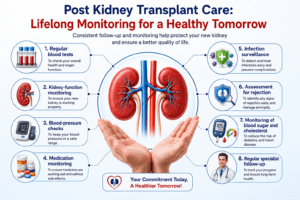
After surgery, Kidney Treatment in Lucknow does not end with discharge from the hospital. Recovery and long-term monitoring are important parts of transplant care.
Patients generally require:
- Regular blood tests
- Kidney-function monitoring
- Blood-pressure checks
- Medication monitoring
- Infection surveillance
- Assessment for rejection
- Monitoring of blood sugar and cholesterol
- Regular specialist follow-up
The exact recovery period differs from patient to patient.
Patients are also generally prescribed immunosuppressive medicines to reduce the risk of rejection. These medicines need to be taken consistently and monitored by the treating team.
Any significant change in urine output, fever, swelling, weakness or other concerning symptoms should be discussed promptly with the transplant team.
Benefits of Kidney Transplantation Explained by the Best Nephrologist in Lucknow
For selected patients, the Best Nephrologist in Lucknow may discuss transplantation as an alternative to long-term dialysis.
Potential benefits of transplantation can include:
- Reduced dependence on dialysis
- Restoration of kidney function through a donor kidney
- Greater flexibility in daily activities
- Changes in dietary restrictions compared with dialysis
- Potential improvement in quality of life
- Reduced need for dialysis-related treatment
- A long-term renal replacement option
However, these potential benefits must be weighed against surgery, rejection, infection, medication side effects and the need for lifelong follow-up.
A transplant should therefore be considered a long-term treatment pathway rather than a one-time procedure.
Who Should Consult a Kidney Transplant Specialist in Lucknow?
Patients may consider a Kidney Transplant Specialist in Lucknow consultation if they:
- Have advanced chronic kidney disease
- Have end-stage kidney disease
- Are already receiving dialysis
- Are approaching dialysis
- Have a potential living donor
- Want to understand pre-emptive transplantation
- Need an opinion about transplant eligibility
- Have questions about donor compatibility
- Have been told transplantation may be difficult
- Want to understand ABO-incompatible transplantation
Patients already receiving dialysis should continue their prescribed treatment while transplant evaluation is underway unless their medical team advises otherwise.
Questions to Ask About Kidney Treatment in Lucknow
Before making decisions about Kidney Treatment in Lucknow, patients and families may want to ask:
- What is the cause and stage of my kidney failure?
- Do I need dialysis at this stage?
- Am I medically suitable for transplantation?
- Should transplant evaluation begin now?
- Can a living donor be considered?
- What compatibility tests are required?
- What happens if the donor and recipient have different blood groups?
- What are the risks of transplantation in my case?
- What medicines will I need after transplantation?
- How often will follow-up be required?
These questions can help patients understand their choices and participate more confidently in treatment decisions.
Patients seeking Kidney Treatment in Lucknow should understand that treatment may include medicines, dialysis, transplant evaluation or a combination of approaches.
Frequently Asked Questions About Kidney Transplant and Kidney Treatment in Lucknow
What are the early signs that kidney failure is progressing?
Patients looking for Kidney Treatment in Lucknow should know that kidney disease may progress without obvious symptoms. As kidney function decreases, some people develop swelling, fatigue, nausea, reduced appetite, itching, changes in urination or breathlessness. High blood pressure and abnormal blood or urine tests can also indicate worsening kidney function. Regular monitoring is particularly important for people with diabetes, hypertension or established chronic kidney disease.
When should I consult the Best Nephrologist in Lucknow for transplant evaluation?
Patients should consult the Best Nephrologist in Lucknow when kidney function has significantly declined, especially when chronic kidney disease is approaching an advanced stage. Patients already receiving dialysis or experiencing progressive loss of kidney function may benefit from discussing transplantation early. Transplant evaluation can take time because the recipient, potential donor and compatibility factors need to be assessed. Early discussion can help patients understand their options before kidney failure becomes more difficult to manage.
Is kidney transplantation better than dialysis?
For suitable patients, transplantation may offer an alternative to long-term dialysis and can provide a functioning donor kidney. However, transplantation requires major surgery, lifelong medicines and regular follow-up. Dialysis remains an important treatment for people who are not eligible for transplantation or are waiting for a donor kidney. A Kidney Transplant Specialist in Lucknow can help compare both options based on the patient’s health, lifestyle, kidney function and medical suitability.
What does a Kidney Transplant Specialist in Lucknow evaluate?
A Kidney Transplant Specialist in Lucknow may evaluate the patient’s kidney disease, general health, cardiovascular condition, infection status and other medical factors. Potential donors also require detailed assessment. Blood-group testing, HLA typing and crossmatching can help assess donor-recipient compatibility. The purpose is to determine whether transplantation can be performed safely and whether additional medical treatment is required before the transplant. Every patient’s evaluation is individualized.
Can a patient with diabetes receive a kidney transplant?
Yes, diabetes does not automatically prevent kidney transplantation. However, patients with diabetes need careful assessment of their heart, blood vessels, blood sugar and other organs before surgery. Good management of diabetes can be an important part of preparation. After transplantation, diabetes still requires monitoring because some immunosuppressive medicines can affect blood sugar levels. A Best Nephrologist in Lucknow can help assess whether transplantation is appropriate based on the patient’s complete medical condition.
What is an ABO-incompatible kidney transplant?
An ABO-incompatible transplant occurs when the donor and recipient have blood groups that are not ordinarily compatible. In selected cases, specialized protocols may be used to reduce antibody levels and manage the immune response. Such transplantation requires detailed testing and careful preparation. Dr Santosh Kumar’s professional profile lists interest in both ABO-compatible and ABO-incompatible kidney transplantation.
Does every kidney failure patient need dialysis before a transplant?
No. Some medically suitable patients may undergo transplantation before starting long-term dialysis. This is called pre-emptive kidney transplantation. Other patients may need dialysis while waiting for a suitable donor or completing their transplant evaluation. The timing depends on kidney function, symptoms, general health and donor availability. Patients should continue their prescribed dialysis treatment unless their treating nephrologist specifically recommends a change.
How long does recovery take after a kidney transplant?
Recovery varies according to the patient’s general health, surgical progress and any complications. Patients are monitored closely immediately after surgery and continue follow-up after leaving the hospital. A Kidney Transplant Specialist in Lucknow can provide individualized guidance about activity, diet, medicines and follow-up based on the patient’s progress. Long-term monitoring remains necessary because kidney function and medication requirements can change over time.
What happens if the transplanted kidney is rejected?
Rejection occurs when the immune system attacks the transplanted kidney. It may sometimes be detected through changes in blood-test results before symptoms appear. Doctors may perform additional investigations and, when appropriate, prescribe treatment to control the immune response. Regular monitoring is therefore essential after transplantation. Patients should never stop their anti-rejection medicines without medical advice because missed or incorrect doses can increase the risk of complications.
Where can I get Kidney Treatment in Lucknow?
Patients looking for Kidney Treatment in Lucknow should consider the nephrologist’s qualifications, transplant-related experience and the diagnostic and treatment facilities available. Dr Santosh Kumar is listed by Apollo Hospitals as a nephrologist practising at Apollomedics Superspeciality Hospitals, Lucknow, with more than 13 years of experience and clinical interests including kidney transplantation, dialysis and chronic kidney disease. Patients should confirm current appointments and transplant services directly with the hospital.
Conclusion: Kidney Transplant with the Best Nephrologist in Lucknow
Kidney failure does not have one treatment that works for every patient. Depending on kidney function, underlying disease and overall health, treatment may involve medicines, dialysis, transplantation or a combination of approaches.
For patients looking for the Best Nephrologist in Lucknow, Dr Santosh Kumar’s professional profile lists more than 13 years of clinical experience, specialist nephrology qualifications and an interest in kidney transplantation, including ABO-compatible and ABO-incompatible transplantation.