
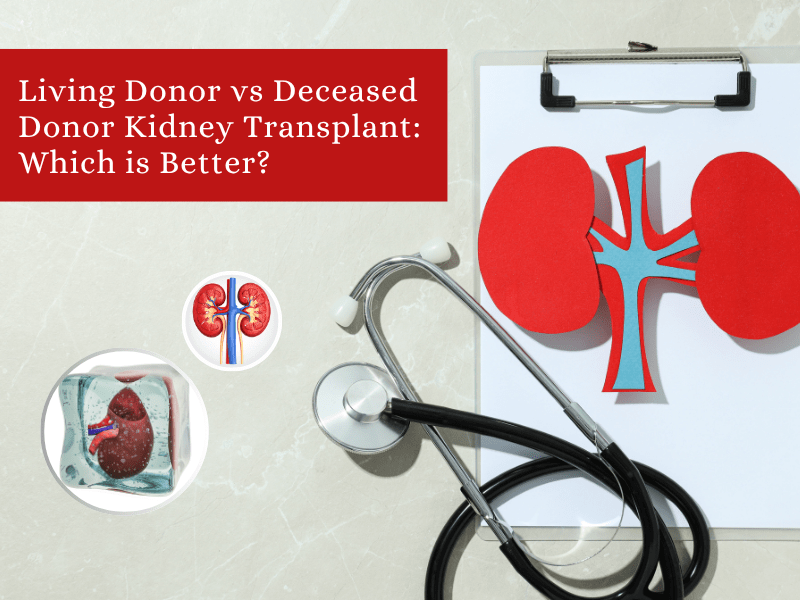
For patients living with end-stage kidney disease, a kidney transplant can be a life-changing treatment that restores health, independence, and quality of life. However, one of the most common questions patients ask is: Living Donor vs Deceased Donor Kidney Transplant: Which is Better?
The answer is not always straightforward. Both living donor and deceased donor kidney transplants offer significant benefits, but they differ in terms of waiting time, success rates, donor availability, long-term outcomes, and overall patient experience. Understanding these differences can help patients and families make informed decisions about their treatment journey.
If you are exploring options for Kidney Failure Treatment in Lucknow or considering Kidney Transplant in Lucknow, understanding the advantages and limitations of each transplant type is an important first step.
Understanding Kidney Transplantation
A kidney transplant is a surgical procedure in which a healthy kidney from a donor is placed into a person whose kidneys are no longer functioning properly. Patients with end-stage kidney disease often require either dialysis or transplantation to survive. While dialysis can effectively remove waste products from the blood, it cannot fully replace all kidney functions. As a result, many patients experience dietary restrictions, reduced energy levels, and limitations in daily activities.
This is where Kidney Transplant Treatment in Indore and advanced transplant programs become important. A successful kidney transplant can help patients:
- Live longer
- Improve quality of life
- Reduce dependence on dialysis
- Return to normal daily activities
- Enjoy greater dietary flexibility
- Improve overall health outcomes
For many individuals, transplantation represents the most effective long-term treatment option for kidney failure.
What is a Living Donor Kidney Transplant?
When discussing Living Donor vs Deceased Donor Kidney Transplant, understanding living donation is essential. A living donor kidney transplant involves receiving a kidney from a healthy living person. Since humans can live healthy lives with one kidney, eligible donors can safely donate one of their kidneys.
Living donors may include:
- Parents
- Siblings
- Children
- Spouses
- Relatives
- Emotionally related individuals
- Close friends
Before donation, the donor undergoes extensive medical and psychological evaluation to ensure safety and compatibility.
The evaluation process typically includes:
- Blood group matching
- Tissue compatibility testing
- Kidney function assessment
- General health screening
- Psychological counseling
- Imaging studies
A living donor transplant allows the surgery to be planned in advance, which often improves outcomes and reduces waiting time.
What is a Deceased Donor Kidney Transplant?
A deceased donor transplant involves receiving a kidney from a person who has passed away and whose family has consented to organ donation. When comparing Living Donor vs Deceased Donor Kidney Transplant, deceased donation plays a critical role because many patients do not have access to a living donor.
The process typically involves:
- Registration on a transplant waiting list
- Medical eligibility evaluation
- Waiting for a suitable donor organ
- Organ allocation based on established criteria
Eligibility generally depends on:
- Overall health status
- Severity of kidney disease
- Ability to undergo surgery
- Absence of major contraindications
Although waiting times vary, deceased donor transplantation provides hope for many patients who otherwise would not have a transplant opportunity.
Living Donor vs Deceased Donor Kidney Transplant: Key Differences
Waiting Time
One of the biggest differences in Living Donor vs Deceased Donor Kidney Transplant is waiting time. Living donor transplantation can often be scheduled within weeks or months once evaluations are completed. Deceased donor transplantation may require waiting months or even years depending on donor availability and matching requirements.
Success Rates
Living donor kidneys generally have higher success rates because the donor is carefully evaluated and surgery can be planned under ideal conditions. Deceased donor kidneys also have excellent outcomes but may experience slightly lower success rates due to factors beyond control.
Organ Quality
Living donor kidneys usually come from healthy individuals who undergo extensive medical screening. Deceased donor organs may vary depending on donor age, health status, and circumstances surrounding donation.
Recovery Outcomes
Patients receiving living donor kidneys often experience faster recovery and earlier kidney function after surgery. Deceased donor kidneys sometimes require additional time before functioning optimally.
Risk of Rejection
Although both transplant types can be successful, living donor transplants often show slightly lower rejection rates due to improved matching opportunities.
Long-Term Kidney Function
Studies consistently demonstrate that living donor kidneys generally function longer compared to deceased donor kidneys.
Cost and Logistics
Living donor transplantation often involves more predictable scheduling and reduced waiting-list expenses. However, both approaches remain valuable options depending on individual circumstances.
Advantages of Deceased Donor Kidney Transplant
Despite the advantages of living donation, deceased donor transplantation remains an essential option. Many patients facing Kidney Failure Treatment in Lucknow do not have access to a suitable living donor.
Advantages include:
- No need for a living donor
- Opportunity for transplantation when family matches are unavailable
- Expanded donor programs
- Access to life-saving treatment
- Increasing organ donation awareness
For countless patients, deceased donor transplantation offers the only realistic path to a transplant.
Are Living Donor Transplants More Successful?
A common question regarding Living Donor vs Deceased Donor Kidney Transplant is whether living donor procedures are truly more successful. The answer is generally yes.
Research shows that living donor kidneys often:
- Function sooner after surgery
- Last longer
- Have lower rejection rates
- Provide improved patient survival
However, transplant success depends on several additional factors:
- Donor health
- Recipient health
- Surgical expertise
- Medication adherence
- Post-transplant monitoring
Therefore, individualized assessment remains crucial.
Who is the Right Candidate for a Living Donor Transplant?
Not every patient is automatically eligible for living donor transplantation.
Candidates typically require:
- End-stage kidney disease
- Medical fitness for surgery
- Ability to take lifelong medications
- Suitable donor availability
Evaluation usually includes:
- Comprehensive medical testing
- Cardiac assessment
- Infection screening
- Psychological evaluation
- Donor compatibility testing
A skilled Kidney Transplant Doctor in Lucknow can determine eligibility through a detailed transplant assessment.
Who May Benefit from a Deceased Donor Kidney Transplant?
Many patients benefit significantly from deceased donor transplantation.
This option may be particularly valuable for:
- Patients without matching donors
- Individuals with small families
- Patients whose donors are medically unsuitable
- Candidates on transplant waiting lists
- High-risk patients requiring broader donor options
When a living donor is unavailable, deceased donor transplantation remains an excellent treatment strategy.
Factors That Determine Kidney Transplant Success
Whether considering Living Donor vs Deceased Donor Kidney Transplant, several factors influence long-term success.
Donor Health
Healthier donor kidneys generally provide better outcomes.
Recipient Health
Managing diabetes, blood pressure, and other conditions improves transplant results.
Age
Both donor and recipient age may affect long-term kidney function.
Tissue Matching
Closer compatibility often reduces rejection risk.
Post-Transplant Care
Regular monitoring is critical after transplantation.
Medication Adherence
Immunosuppressive medications must be taken exactly as prescribed.
Working with a trusted Kidney Transplant Doctor in Lucknow helps maximize transplant success and long-term kidney health.
Common Myths About Kidney Donation and Transplantation
Many misconceptions create unnecessary fear about transplantation.
Myth: Donors Cannot Live Normal Lives
Most healthy donors live completely normal, active lives after kidney donation.
Myth: Kidney Transplant Cures All Kidney Problems Forever
Transplantation improves kidney function significantly, but lifelong follow-up remains necessary.
Myth: Older Individuals Cannot Donate
Many older adults may still qualify as donors after proper medical evaluation.
Myth: Organ Donation is Unsafe
Organ donation follows strict medical and ethical guidelines to ensure donor and recipient safety.
How Dr. Santosh Kumar Helps Patients Through the Kidney Transplant Journey
Dr. Santosh Kumar is a Senior Consultant Nephrologist & Kidney Transplant Specialist at Max Super Speciality Hospital, Lucknow.
With over 15 years of experience, he has helped thousands of patients navigate the transplant process through:
- Pre-transplant evaluation
- Donor assessment
- Kidney disease management
- Dialysis support
- Post-transplant follow-up
- Long-term kidney care
Patients seeking guidance from a Kidney Transplant Doctor in Lucknow benefit from comprehensive, evidence-based care throughout every stage of treatment.
His expertise as a Best Nephrologist in Lucknow allows patients to receive individualized transplant planning and long-term support.
Living Donor vs Deceased Donor Kidney Transplant – Which Option is Better?
When considering Living Donor vs Deceased Donor Kidney Transplant, there is no universal answer that applies to every patient.
Living donor transplantation generally offers:
- Shorter waiting times
- Better long-term outcomes
- Faster recovery
- Longer graft survival
However, deceased donor transplantation remains an invaluable option for patients without suitable donors.
The best choice depends on:
- Medical condition
- Donor availability
- Compatibility
- Personal circumstances
- Expert nephrology evaluation
Consulting a Best Nephrologist in Lucknow can help determine which option is most appropriate for your specific situation.
Frequently Asked Questions (FAQs)
Is a living donor kidney transplant better than a deceased donor transplant?
Living donor transplants generally provide shorter waiting times, faster kidney function recovery, and longer graft survival. However, deceased donor transplants remain highly successful and may be the best option when a suitable living donor is unavailable.
How long does a living donor kidney last?
Many living donor kidneys function for 15–20 years or longer. Long-term outcomes depend on donor quality, recipient health, medication adherence, and regular follow-up with a Kidney Transplant Doctor in Lucknow.
What is the success rate of kidney transplantation?
Modern kidney transplantation has excellent success rates. Many patients experience significant improvement in health and quality of life. Outcomes are influenced by donor compatibility, medical condition, surgical expertise, and post-transplant care.
Can a family member donate a kidney?
Yes. Parents, siblings, children, spouses, and certain relatives may donate a kidney if they meet medical and compatibility requirements. Comprehensive donor evaluation ensures safety for both donor and recipient.
How long is the waiting list for a deceased donor kidney?
Waiting times vary depending on blood group, organ availability, and allocation systems. Some patients may wait months, while others may wait several years before receiving a suitable donor kidney.
Is kidney donation safe for donors?
For carefully selected healthy individuals, kidney donation is generally safe. Donors undergo extensive medical evaluations and continue regular follow-up after donation to ensure long-term health and well-being.
Who is eligible for kidney transplantation?
Most patients with end-stage kidney disease may be considered for transplantation if they are medically fit for surgery and lifelong follow-up care. Evaluation by a Best Nephrologist in Lucknow helps determine eligibility.
How can I consult a kidney transplant specialist in Lucknow?
You can schedule a consultation with Dr. Santosh Kumar, an experienced Kidney Transplant Doctor in Lucknow, for transplant evaluation, donor assessment, dialysis planning, and long-term kidney care guidance.